Cordillera Weaves
Baguio City is a place loved by tourists, which is a great opportunity for businesses and commercialization. Despite that, the Cordillera culture remains strong. Baguio crafts and traditional arts are still observed and present around the city.
It was stated by local historians that Baguio City’s creative scene started developing around the 70s. With such a rich culture, it’s not surprising that their history goes way back. It also serves as a proof that their traditions are engraved in their arts, such as traditional clothing, weaving, and handicrafts.
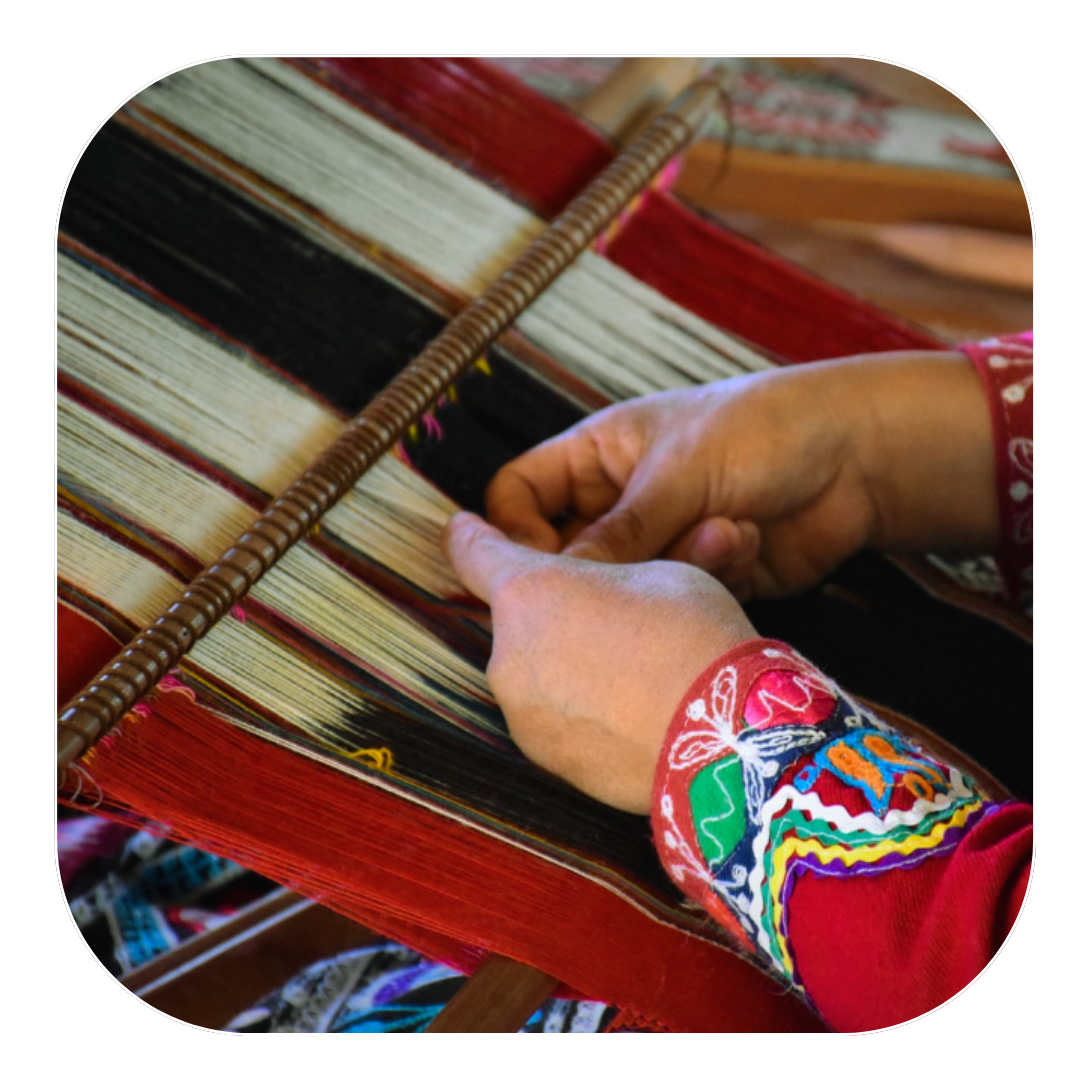
Woven fabrics are not just for clothing and everyday use in the house; they are also an art in itself. It creates an identity for the people who wear it, which distinguishes them from other cultures. Each design has its own distinct pattern, which requires effort and detailed work. And since there are different groups in the Cordillera, each has their own design. For Ifugao, their “Ikat” is designed with diamond red and white stripes. On the other hand, Bontoc’s style shows geometric patterns of common objects such as lizards, rain, and flowers. Additionally, Kalinga weavers add symbolism into their designs, specifically colors.
These handwoven textiles are diligently made by Cordilleran women. At a young age, daughters will be taught how to weave by their mother to pass along their skills. By continuously doing this, they will secure a place for their traditions in the future. This consistency may rule out the possibility of the Cordillera culture from dying.
Wood Carving & Bamboo Crafts
Baguio City is known for its wood carving pieces and its bamboo crafts, From having simple pieces to its intricate design. Even before the city’s designation, Baguio City has historically provided an enabling environment for creativity of all sorts, especially in the field of crafts and folk arts.
The City fostered a highly rich Cordilleran cultural diversity, which is reflected in its crafts and folk arts, as a result of its role as a “melting pot” for the region’s indigenous peoples. Numerous creative verticals, like the Ifugao heritage of woodcarving, the back-loom weaving traditions of women throughout the Cordillera and Northern Luzon, the craft of silver and basket weaving, and the art of tattooing, have flourished and are still developing in Baguio City.
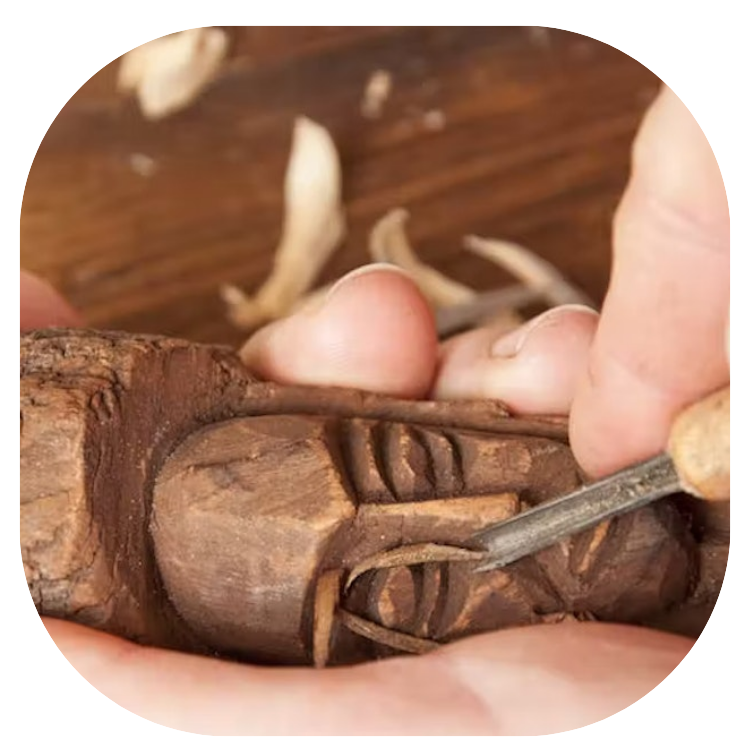
One of the most esteemed artistic expressions in Baguio City is wood carving. Similar to the weaving tradition, this form of art has its roots in the province of Ifugao, rather than originating directly in the city. It is deeply intertwined with the cultural fabric of the region. According to local narratives, the gods imparted the knowledge of carving to their ancestors, particularly the bulul, a prominent wood carving representing protective deities safeguarding rice fields. These carvings are revered and meticulously cared for, as they are believed to embody the ancestral spirits’ power. They are often attributed with enhancing rice yields and shielding the harvest from various threats such as pests, theft, and natural disasters.
In Baguio City, wood carvings stand as a testament to the rich cultural heritage and reverence for tradition. An example of this is the succession totem pole made by Manong Ernesto, portraying ten busts of prominent figures of Philippine history beginning with Admiral George Dewey, General Emilio Aguinaldo, down the line. His succeeding project was a wood carving depicting the Surrender of General Tomoyuki Yamashita, the piece is currently displayed at the US Ambassador’s Residence. This 2” x 37” x 53”, 50 pound Narra carved mural exhibits 62 of the 63 participants who joined the commemorative surrender. This piece of work was unveiled by then Benguet OIC Governor Bantas Suanding, OIC Vice Mayor Nicolas Tabora and Commander Major Leon Walker of the 6020th Support Squadron. According to Manong Ernesto the first “Surrender of General Tomoyuki Yamashita ” and the “totem pole” were his best works in Camp John Hay.
These intricately crafted pieces not only adorn spaces but also carry the weight of ancestral wisdom and protection, embodying a connection to the land and its stories. Through the artistry of wood carving, the spirit of Ifugao lives on, safeguarding both the harvest and the collective memory of the people.
View Gallery
Wood Carving Piece Title
Wood Carving Piece Title

Silvercraft & Metalcrafts
The birth of the pioneer mining firms in the region beckoned the start of the thriving gold and silver craft starting in the late 1800s to the early 1900s.
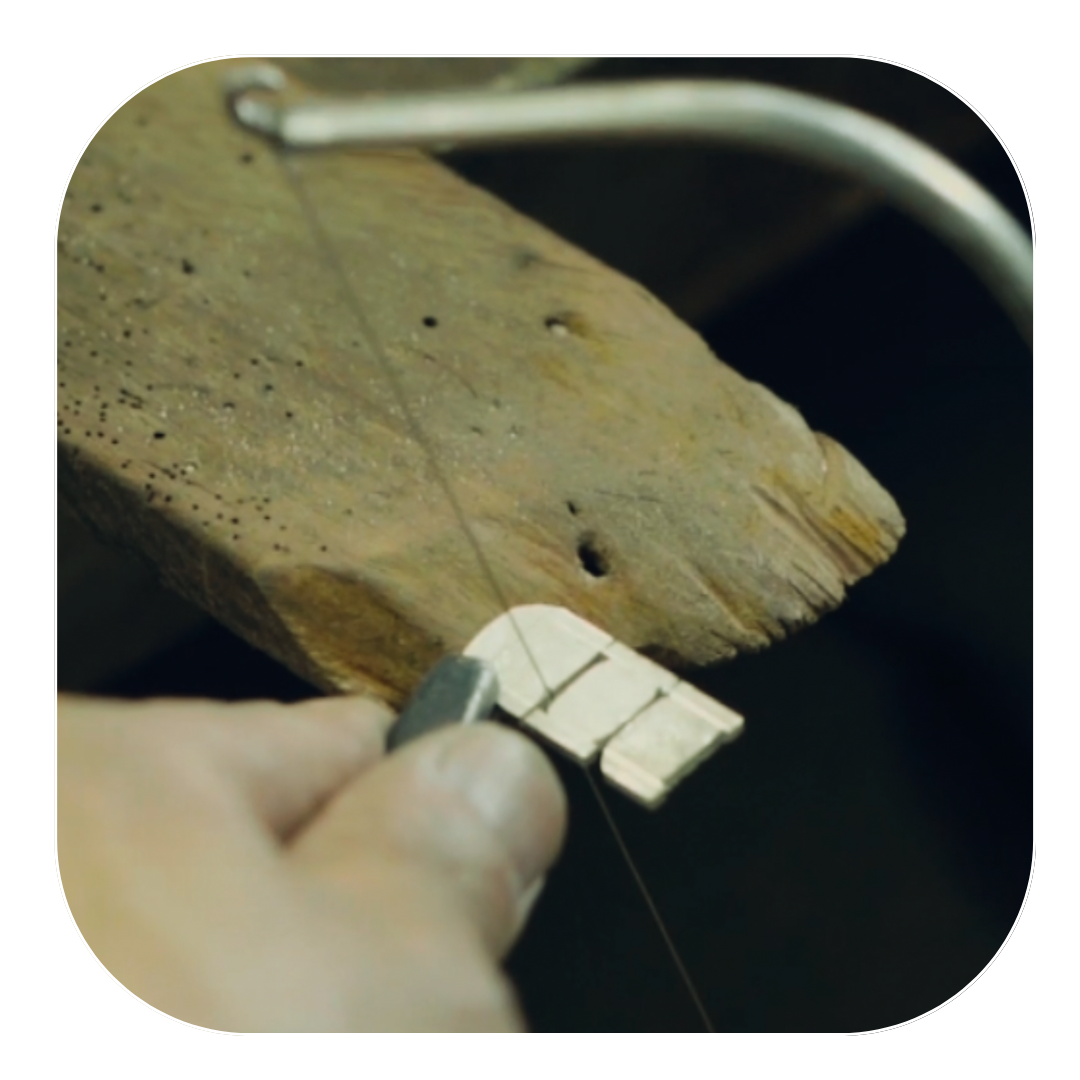
In 1910, the Belgian Congregation of Missionaries of the Immaculate Heart of Mary ran a school with 10 little boys. Six years later, Fr. Florimund Carlu (CICM) and Sister Calorine (ICM) launched a vocational workshop for the same batch of boys. The workshop was incorporated in the school program, a training program which offered courses in carpentry, tailoring, leather craft, and silversmithing which turned to be the most popular among the boys. Their work in the silver shops paid for their high school education. As they became more adept in the craft, the sister taught them more intricate designs.
The St. Louis silver shop first became popular when American servicemen visiting Baguio City for rest and recreation who frequented the stalls to buy silver items as souvenirs to take home. Soon enough, visiting dignitaries also made it a regular part of their itinerary to visit the shop whose fame grew by word of mouth. After leaving his store management duties to the nuns, Fr. Carlu continued to train apprentices in the shop that survived World War II and the strong earthquake that struck Baguio in 1990.
Each step in making the intricate filigree is done by one person. The silver used for the filigree is 95% pure.
(Source: Baguio Centennial Commission, Builders of Baguio, 2010, p.274)
“While mining exists, Baguio’s silvercraft stays and thrives.” – Preciosa Marcelo, owner of Pilak Silvercraft and Gift Shop.
Baguio City has always been known as a mine-rich region, its association to silver mining started in the late 1800s to the early 1900s. Ever since then, the silvercraft industry of Baguio has been thriving.
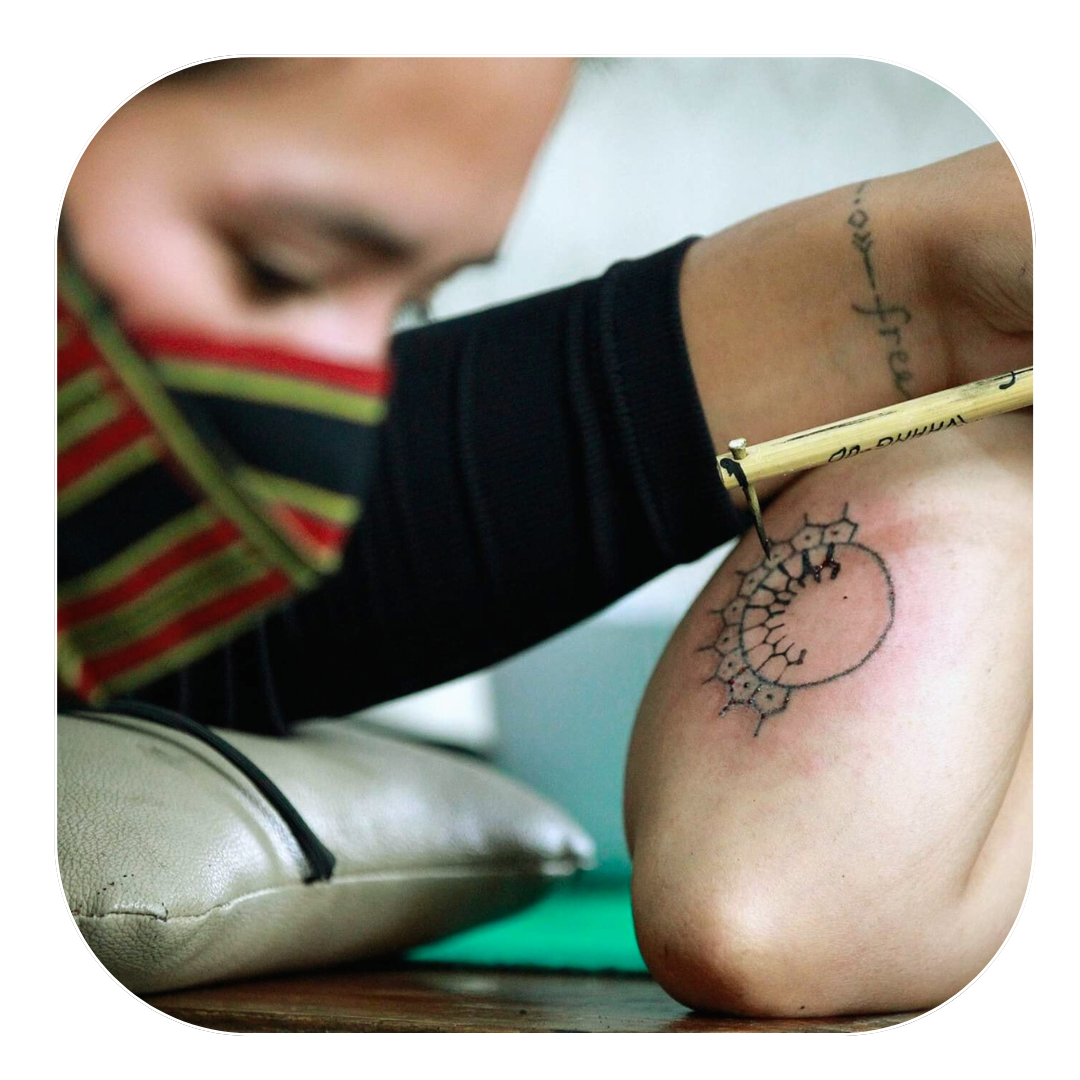
Traditional Tattoo
Baguio City, a “colorful, multicultural city full of diversity where artistic culture ranges from crafts and folk art expressions to woodcarving, silvercraft, weaving, and tattooing” according to the United Nations Educational, Scientific and Cultural Organization (UNESCO).
In terms of creative arts, the City of Pines has always been multifaceted, giving locals and tourists the freedom to explore various activities or destinations according to their own creative interests and goals.
Tattoos, including Traditional ones, have always been a part of the creative and cultural expression of the Cordillerans. These days, traditional tattoos are making a comeback, and many locals and tourists look forward to finding it at the very heart of the City of Pines.
What are Traditional Tattoos? “Batok”, “Batek”, “Patik, “Batik”, or “Buri”, are a few of the names Filipinos would call this method of tattooing. “Tek” is the sound created when hitting the stick to create the tattoo. To make an instrument for tattooing, a lemon thorn is attached to the end of a light wooden stick. As for the ink, it is often made from soot scraped from a clay pot and mixed with water or plant dye until the desired consistency and color is achieved.
In the Cordilleras, specifically in Bontoc, Ifugao, and Kalinga, only warriors who were successful in headhunting would be honored to have a tattoo. According to Analyn Salvador Amores, PhD, tattooing has been a part of Kalinga’s social practices that is tied with various social meanings.
The usual designs of traditional tattoos consist of geometric patterns, including lines, circles, stripes, and zigzags, and figurative ones such as lizards, snakes, scorpions, and plants.
There are many talented tattoo artists with their own studios in Baguio City, but there is a yet a studio that would offer traditional tattoos. But this doesn’t mean you cannot get a traditional tattoo in the City of Pines, it just means you have to find the right artist and place for it.
A few known traditional tattoo artists in Baguio City are Wilma Gaspili, also known as “Ate Wamz”, and Ammin Acha-ur, better known as “Ammin The Traditional Igorot Tattoo Artist”. You can catch these talented artists among Baguio’s creative festivals such as the Mandëko Kito Artisans Fair, Tattooing Events during Indigenous People’s Month, and Impakabsat Regional Trade Fair: Only the Best from the Cordilleras.
In case that you are unavailable during those festivals, SM City Baguio would also occasionally conduct events wherein traditional tattoo artists from other provinces are invited to offer their services to locals and tourists, to experience a tattoo by a mambabatok.
From these alone, it is very much evident how Baguio is creatively and culturally enriched, making it a diverse and inclusive creative hub indeed.
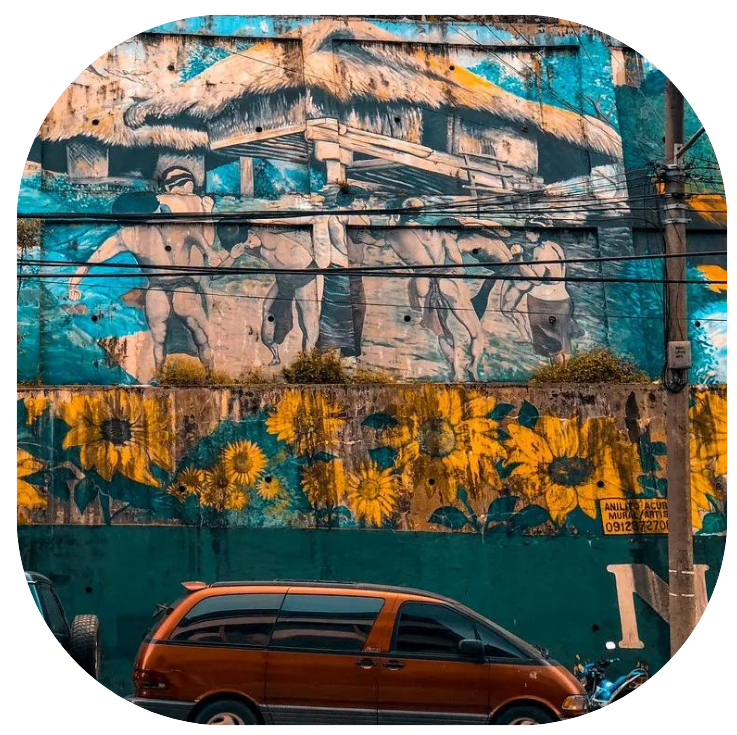
Visual Arts
The cold breeze of Baguio would never be at par with the warmth it provides to its visitors. There is comfort in knowing that a small, mountainous place would be the flocking destination of different travelers around the country.
Visual Arts are a rich culture in the city, dominating a wide array of mediums that are either well-known or unheard of. Each piece is an admiration of Baguio’s long history of culture, tradition and heritage.
Named as a UNESCO Creative City, Baguio draws more visitors for its crowning glory–crafts and folk art.
Prominent persons in the creation of traditional art, film, photography, and even digital art are rich in the city. In itself, Baguio is a place where great minds filled with burning passion arise. A place where city life meets nature, and where modernity traverses tradition and culture. Baguio is a wonderfully crafted city. Maybe that’s why the cold, breezy winds have guided the hands of skillful local artisans to share their gift to the world.
Baguio’s distinction to other cities is clear–it fosters the creative minds of its local artists and paves the way for new pieces to come forward without hiding.
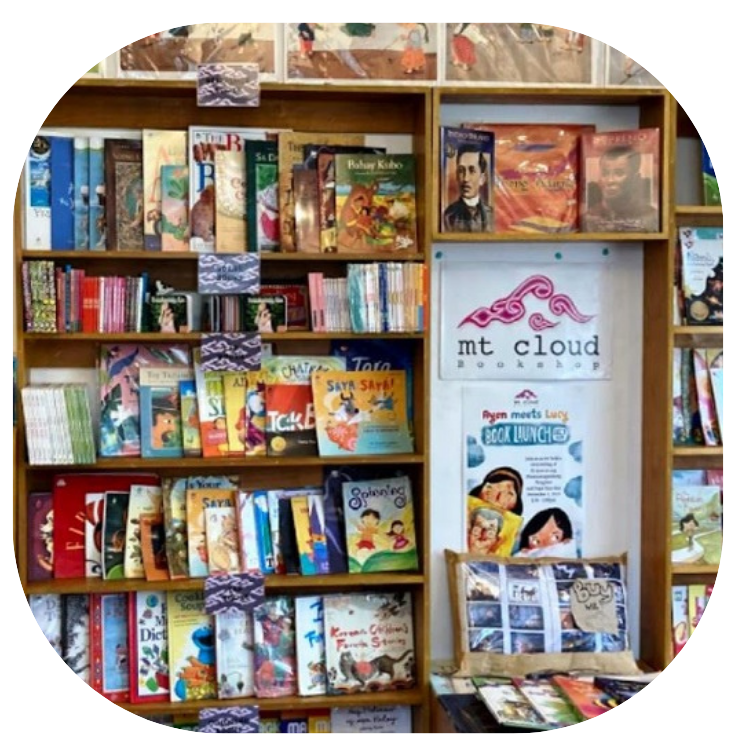
Literary Arts
The arts and crafts present in the city are ones that are colored visually. Beyond these visually appealing arts are writers that color the imagination of the reader, one that helps them realize a world of different senses, both fiction and non-fiction.
Some of the prominent writers who were born, raised, or lived in the city of Baguio are the following:
- Luisa A. Igloria (Maria Luisa Aguilar-Cariño) was born on September 3, 1961 in Baguio City. She graduated with a B.A. in Humanities, cum laude, major in Comparative Literature, minor in English, and cognate in Philosophy, from the University of the Philippines Baguio, where she also taught and served in leadership positions. She has won various national and international literary awards, honors, grants, fellowships, and prizes. Her first full-length collection, Cartography (Anvil, 1992), comprises her poems on Baguio.
- Elizabeth “Babeth” Lolarga is a journalist, poet, visual artist, and teacher. She finished journalism at the University of the Philippines (UP) Diliman and fine arts at UP Baguio. She wrote two books released by the University of Santo Tomas Publishing House: Catholic and Emancipated (selected essays). She is also the author of three poetry collections in limited editions: The First Eye, Dangling Doll: Poems of Laughter and Desperation, and Big Mama Sez: Poems Old and New. She is a freelance journalist and a member of the Baguio Writers Group and the Philippine Center of International PEN.
- Luchie Maranan is a multi-awarded writer and UP Baguio alumna who graduated with an A.B. Humanities (Comparative Literature) degree in 1981. She is the present Vice-Chairperson of the Dap-ayan ti Kultura iti Kordilyera (DKK) and a former president and active member of the Baguio Writers Group. She writes poetry, essays, and short stories for children and does translation. She is also a book editor and has work anthologies.
- Kaye Leah C. Sitchon is a writer and instructor known for contributing to various publications. She participated in creative writing workshops such as the Silliman University National Writers Workshop (SUNWW), where she joined as a fellow in the Creative Nonfiction category. She was the first prize winner for the Doreen Gamboa Fernandez Food Writing Awards 2020 for her essay “Sinanglaw for Breakfast,” and in 2022, she won 3rd prize for her essay “Pakbet: The Kumintang of the Women in Santa Maria.”
- Nonnette C. Bennett is a long-time journalist based in Baguio City. She has contributed articles about food and culture to the Baguio Midland Courier for over 30 years.
- Gaby Keith is a journalist and has written several news articles for the City Government of Baguio and The Manila Times.
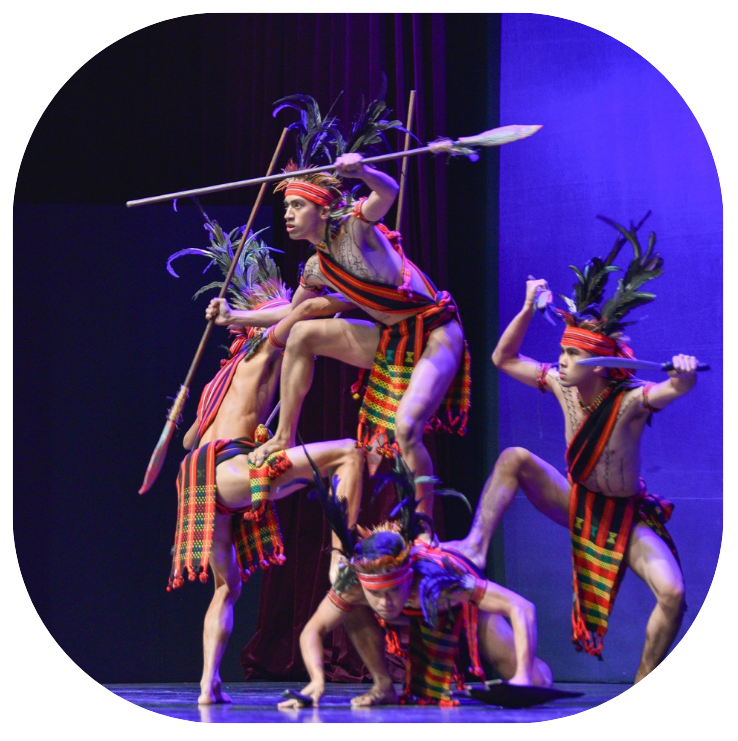
Cultural & Performing Arts
City of Baguio takes pride in its art. More than this, cultural performances are present in its blossoming folk art, presenting indigenous traditions in modern ways.
The breeze of the Baguio weather guides the dancers’ movements, gracing its meaning with different significant impacts. As a venue for culture and arts, Baguio’s performances are realized in different settings-university, street performances, and international dance competitions. These dances are a reality of the city’s most prevailing glory to become an epitome of creativity.
Baguio is a city rich in artistic expression, with creative works seemingly adorning every corner. Starting with a theatrical performance performed in Baguio City. Macli-ing Dulag, or more popularly known as “Macli-ing”, was a respected elder and pangat (traditional leader) of the Butbut ethnic group in the village of Bugnay, Tingalayan, Kalinga. The theatrical play was about the heroic defense of land, life, and honor, which sets inspiration and stands as a testament to the enduring strength of community and resilience in the face of the ongoing struggle for human and ancestral land rights.It was performed on January 25. 2024 at the Baguio Convention Center.
Food
Beyond the recognition for Baguio’s crafts and folk arts, traditional culinary dishes are also present in the heart of the city.
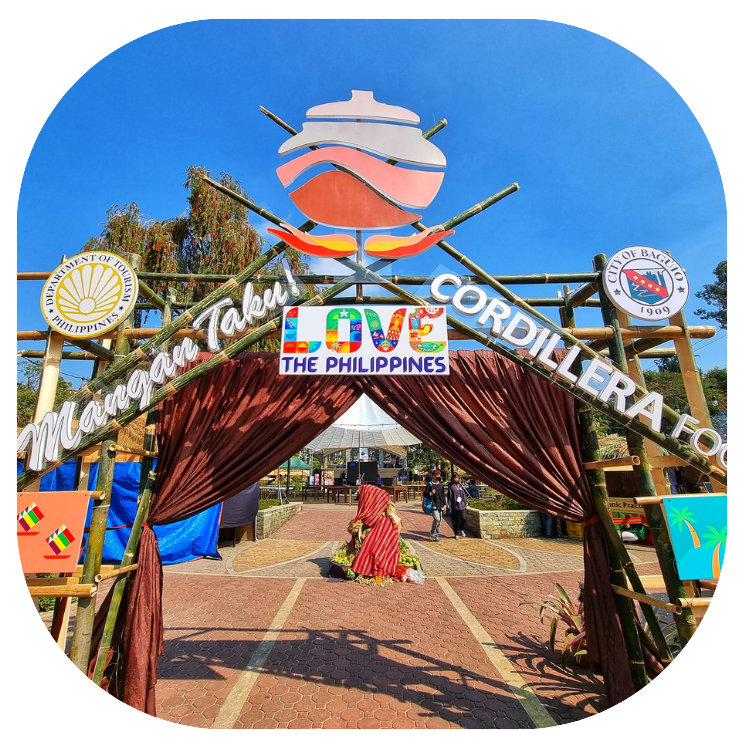
Mangan Taku! is an annual recognition of the Cordillera provinces’ exceptional dishes and traditional culinary arts. It paves the way for each local food’s recognition beyond their town and reaches the hearts of Baguio’s wide array of visitors with each flavor representing the region’s best plate.
Yet, Baguio proves as a melting pot of culture and tradition. Discovering food that suits everyone’s palate is easy since Baguio is a convergence of traditional and urbanized life.
Festivals
PANAGBENGA FESTIVAL
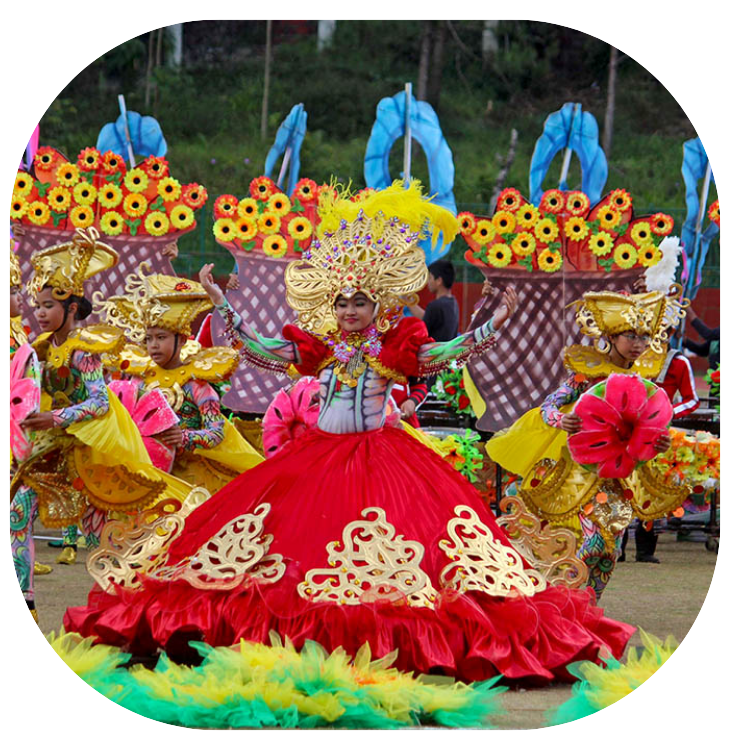
The creativity of townsfolk in Baguio doesn’t end with arts and crafts. During the months of February and March, tourists await one of the grandest celebrations in the country, the Panagbenga Festival.
This festive celebration draws thousands of guests awaiting each grand float parade and activities.
Like the blossoming of flowers, Panagbenga is a symbol of new beginnings for the people of Baguio. It started during former Mayor Mauricio Domogan’s term to boost tourism after the devastating 1990 earthquake. The festival served as a testament of the community’s human spirit and natural beauty.
To this day, the extravagant parade of street dances, floats, and exhibitions serve as a reminder of Baguio’s revived life.
As part of the annual Panagbenga Festival, Session Road blooms with creativity and life. Local artisans displayed their handmade crafts. Vendors showcased their leather works including shoes and sandals, others displayed their wood works, books, souvenirs, and of course, food. This event is also a way for local merchants to retail their products to a wider audience.
IBAGIW CREATIVE FESTIVAL
Since Baguio’s inauguration as a UNESCO Creative City, Ibagiw Festival has served as the celebration of crafts and folk arts. Different exhibitions of talent bring life to this festival. Celebrated from October to November, Ibagiw includes art exhibits, theatrical performances, workshops, trades, fairs, and other activities that encourage both locals and tourists to explore the gems Baguio has to offer.
MANGAN TAKU FOOD FESTIVAL
Crafts of Baguio’s creativity doesn’t just feat visitors’ eyes. The Mangan Taku Food Festival honors culinary traditions from all the provinces of Cordillera. This year, Mangan Taku was set up in Rose Garden, Burnham Park.
Each province in the Cordillera region showed how each of their signature culinary dishes are made. From Abra’s Miki to Ifugao’s Inatta or Binakle, there’s a new treat to discover. Aside from the traditional way of cooking, other foods are combined to create a modern taste.
There’s more to try and discover in the next festivals of Baguio. Consider planning your next itinerary using this guide. Well, you don’t have to worry about missing out on something because in Baguio, each month is a festival of crafts and folk arts.
Music
In the Philippines, Baguio City is a thriving center of art and culture. Baguio is known for being a vibrant hub for music and the arts, attracting artists, musicians, and fans from all over the world in addition to its pleasant weather and breathtaking scenery. In this article, we explore the different sources of music and arts in Baguio City.
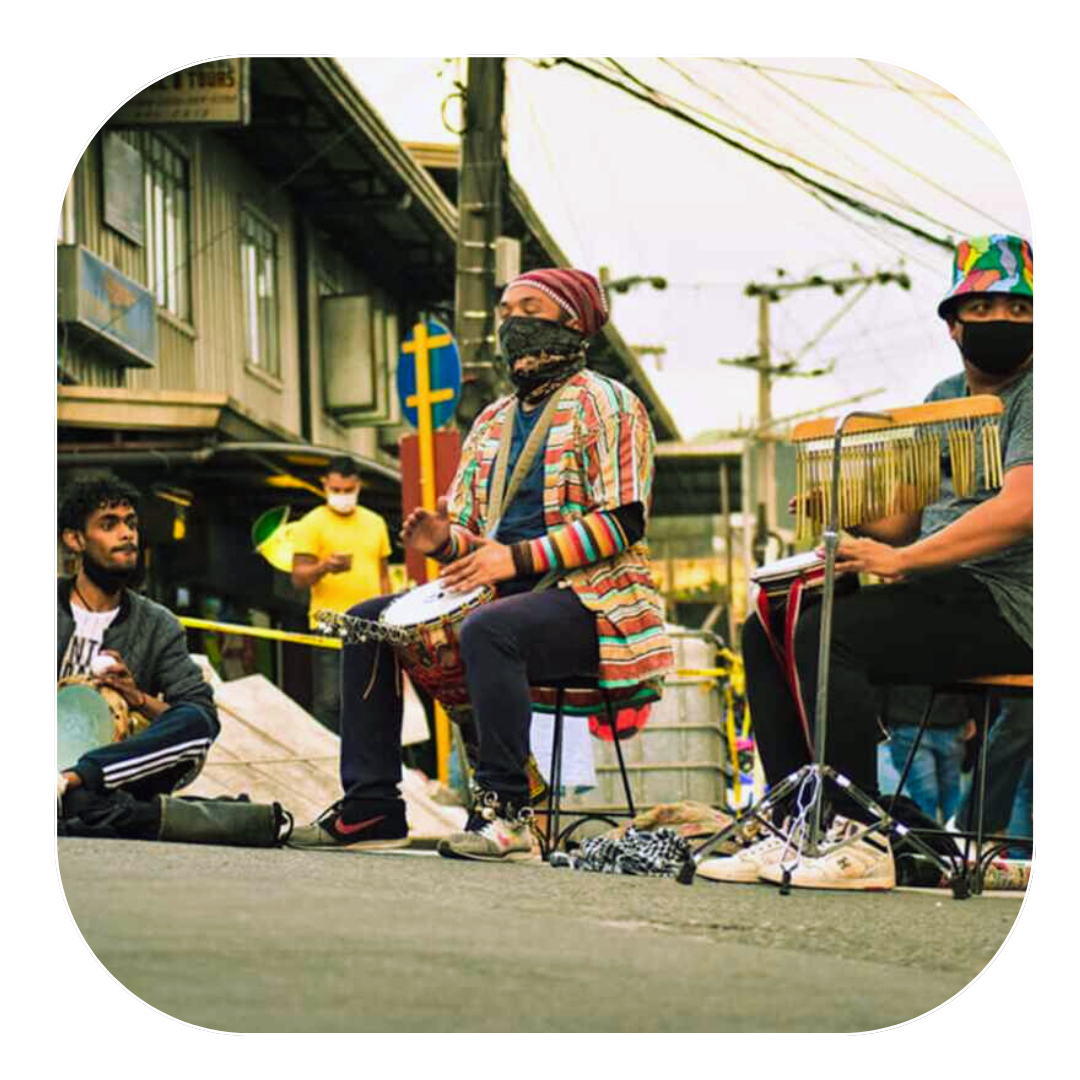
Baguio’s streets and venues resonate with music, filling the air with a mellow blend of sounds. Starting with the musicians in Session Road, Baguio City. Every Sunday, the whole Session Road is being closed for the buskers for them to be able to showcase their talents while earning money. Some are singing, dancing, and playing different instruments. In line with this, the musical diversity of Baguio is further enhanced by the city’s music events, such as the Baguio Arts and Creativity Festival, which feature a wide range of genres from jazz and folk to rock and experimental music.
Baguio City also has different local artists that are making names on the high media mainstream. First is Cup of Joe, Cup of Joe is a six-member band from Baguio City whose members include vocalists Gian Bernardino and Raphaell Ridao, keyboardist Xen Gareza, lead guitarist Gab Fernandez, bassist Sevii Severino and guitarist CJ Fernandez. The band have been releasing music since 2019 and to date have ten singles to their credit.
Another one is Dilaw.Filipino rock group Dilaw was founded in 2021 in Baguio, Benguet. At first, singer-songwriter Dilaw Obero and guitarist-instrumentalist Vie Dela Rosa performed as an alternative hip-hop duo. With the addition of Wayne Dela Rosa, Leon Karlos, En Altomonte, and Tóbi Samson, the ensemble grew into a full-fledged indie rock collective.
Baguio City is more than simply a place to visit; it’s a canvas ready to be filled with the vivid colors of art and music. The city invites tourists and artists to immerse themselves in its cultural tapestry, from the bright strokes of its galleries to the rhythmic rhythms of its streets. But as we visit the beauty of Baguio City, let us not forget to respect its culture and places by following its rules and regulations.